
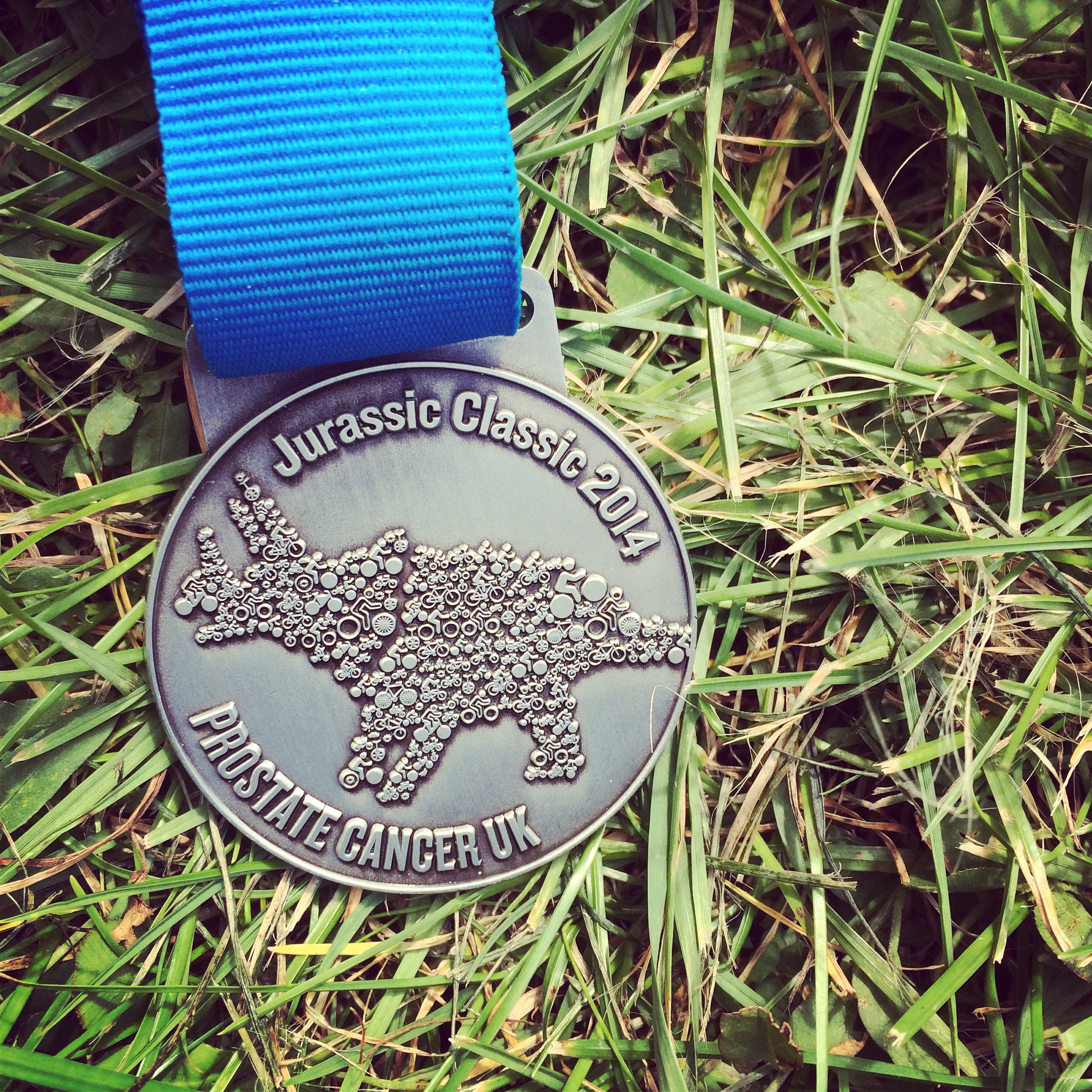
 The Jurassic Classic 2014 took place on Sunday 17 August. It’s a sportive offering 60km, 60mile and 100mile routes, beginning in Exmouth and taking in the whole of East Devon. The event is in its third year and, after a troubled start when the 2012 event was postponed after a huge downpour flooded significant parts of the route, the organisers have persevered and now it is a fixture in the Devon cycling calendar.
The Routes
The 100mile ‘Epic’ route blossoms out around the Sid Valley and surrounding areas, beginning with a coastal section from Exmouth through to Branscombe before turning inland and making for the Blackdown Hills, before winding around the East side of Exeter and across Woodbury Common to the finish.
Route maps can be found here:
100mile
http://www.bikemap.net/en/route/2760370-jurassic-classic-100mile/
100km
http://www.bikemap.net/en/route/2760374-jurassic-classic-100km/
50km
http://www.bikemap.net/en/route/2760376-jurassic-classic-50km-route/
It’s a challenge, or at least it seemed so to me. The 100mile route takes in more than 7000ft of climbing, in a combination of sharp inclines like Salcombe Hill in Sidmouth and the climb out of Branscombe and longer slogs, such as the road from Honiton up to Dunkeswell at the top of the Blackdown Hills. Most of the toughest climbs are out of the way within the first 50 miles, but the remainder of the route still has its fair share of sapping gradients, which seem doubly draining when endured after the ups and downs of the first half. The Exmoor Beast claims 6165 ft of climbing for its 100 mile route, which is a useful if daunting comparison.
The scenery is beautiful and carries a little extra magic due to the ‘hidden’ feel that some of the route has. It feels like an exploration, and the route itself seems designed to criss-cross as much terrain as possible. Very little is on busy roads and riders will find themselves snaking through woodlands atop the Blackdowns, venturing into and out of the apparently secret valley that nestles between the River Sid and the River Coly and otherwise tearing along as if they were out for a Sunday blast, alone in paradise.
The Event
The event itself was smaller than the big Devon sportives, the Dartmoor Classic and the Exmoor Beast, but still managed to persuade over 500 people around the testing terrain. The previous two years have run more than 1000 around the route. It certainly felt quiet as the twists and turns of the East Devon countryside absorbed the riders effortlessly. No fighting to push past other riders with cars pressing you from behind and no sense that you may be holding up 35 members of the Exeter Wheelers as they wait for a straight to get past you and back on target for gold classification.
The 100 mile route had good signage and 3 feeding stations, at 35, 65 and 93 miles. As befits the lower-key feel of the event, these were stocked with fruit, flapjacks and lots of homemade cake, with the ladies of the Gittisham and Aylesbeare village halls serving tea in china cups. I confess that I had expected the timing mats which were in place at 2 of the 3 to stop the clock. My time when I finally crossed the finish line was about 35 minutes more than my time as recorded by Strava, which included me pausing at each feed station. Had I clocked my Strava time then I would have made the silver classification, and been delighted, but I’m a relative newcomer to sportives, so perhaps this is standard.
The organisation was good enough, and I don’t mean that perjoratively. The event is staged to raise money for Prostate Cancer UK and so trestle tables and Women’s Institute cakes instead of sponsors tents and sports nutrition promotions are just fine by me. The team managed to get us all away and, as far as I know, we all came back. They did it with what felt like a light touch, and that’s fine by me. We were here to ride.
Me
Cycling is man’s most efficient form of self-powered existential crisis. I entered the Jurassic Classic for two reasons. Firstly, and mostly, because it connects together all the bits of cycling that I do the most, that I love the most, that I know the most. I wanted to complete it as some sort of tying together, a tribute to the landscape that had turned me into a cyclist. Secondly, because it’s been 2 or maybe 3 years since I rode 100 miles in a day and I wanted to do it again.
I knew in the run-up, and as I sat at the starting gate at 7am, that I would begin the ride thinking about the many times I had ridden those lanes before and taking comfort from the knowledge that I could climb the ups and negotiate the downs. I also knew that no matter how confident I felt, no matter how much I told myself that I knew every twist and turn, that I had this one, that I would find myself at some point in the third or fourth quarter of the ride deeply wondering whether I had taken too much on. I also knew that this would be preceded by a couple of hours in the psychological washing machine.
Long distance cycling, whether with a group or alone – and in this case I was both, having set out with 500 other riders to do the route on my own – is a singular mental experience, in my view at least. To spend 7 hours alone with your own thoughts and to have those thoughts sliced into tiny pieces and flung around as if in a snow globe with snatches of music and lines from recent conversations and random voices you can’t control, all of which begin to form a coalition of doubt over to your ability to keep your legs turning over and over and over for the next 4 hours.
Well, all that happened. And as the worst of it was kicking in, so did one of the two brief, cold rain showers. So did the climb up the Blackdowns and minutes later I was fighting a looming faint.
Otherwise, riding this event on home territory was everything I’d hoped it would be. It’s beautiful but I didn’t need reminding of that. I’m lucky enough to live here. Knowing what was coming, good or bad, and knowing that you had climbed it before, picked your way between these points before, really helped with the mental heavy-lifting and just being able to orient myself in the countryside and understand how far along I was without a computer (which I leave at home these days) or distance markers (which didn’t feature) helped to settle the mind and bolster the legs.
When I did speak to people it was to reassure them that they were nearly at the top of some particular climb, or that there was a rewarding descent around the corner. I felt, briefly, like a guide.
Otherwise the sportive format is, for someone who has little or no grasp of cycling technique, a great reminder of how different we all are as riders. To watch riders slowly group together and then slowly separate as they go is fascinating, albeit always inconclusive for a dim bulb like me. The always-undulating terrain of East Devon provides constant opportunities for observation. Why is that guy drifting ahead of me on the short inclines but falling behind on the longs? And how come I put a good quarter mile between me and this chap and yet now he’s back with me? Am I fading? Is he doping? What should I be doing differently?
I finished happy and strong, still able to hammer the down into Exmouth once I knew Woodbury was behind me.
Vignettes
A guy I had earlier followed the wrong way through a priority sign, attracting the ire of one of the huffier Sidmothians, arrives at the 64-mile feed stop, catches my eye and says, in a sharp Northern Irish accent, “It’s been emotional. My body’s built for comfort not climbing fukken hills like these…”
The two guys in matching shirts ahead of me as I start climbing Salcombe Hill have been just the sort I envy. Apparently making progress solidly without pain, I imagine they must complete events like this most weekends. But what do I know about what they’re feeling? Half way up one of them falls off. “I took the gradient out of it then next thing I knew the front wheel had gone from under me!” He precedes to dust himself off and begin to walk, still ahead if his mate and me. As I pass them both, the one still riding asks whether we are near the top. I say, “Yes,” but it’s all relative.
Halfway up the climb out of Colyton I pass two grey-haired tourers, laden with panniers and, I deduce, not participating in a 100-mile sportive. They are having trouble with one of their bikes. I look at the gradient, look at the other riders, think about the gradient and the time and realise I have to stop. “Are you guys okay?” “No,” the woman replies with what I will later decide was a strong Dutch lilt. “He is damaged.” She has a look on her face half way between despair at being stuck with a broken bike in the middle of the unfamiliar countryside and despair at having a husband so weak as to become damaged. I point them back down the hill and tell them if they head for the School they will find a whole bunch of people who know a whole bunch about bikes and who will help them, and possibly give them free cake. They seem happy. I head up the hill again and 15 seconds later pass a chap I work with, just out for his Sunday ride.
In conclusion
Riding an event like this where you live adds something significant. I know many cyclists baulk at the idea of paying to ride the routes they take for free the rest of the year round, but that’s short-sighted. The money, in this case at least, goes to a good cause, and you get the rare chance to experience those roads anew, and to welcome others to them.
So, check out your local events listings, ride your local sportive and then, next year, come and ride mine, the Jurassic Classic.
 The Primary Position